
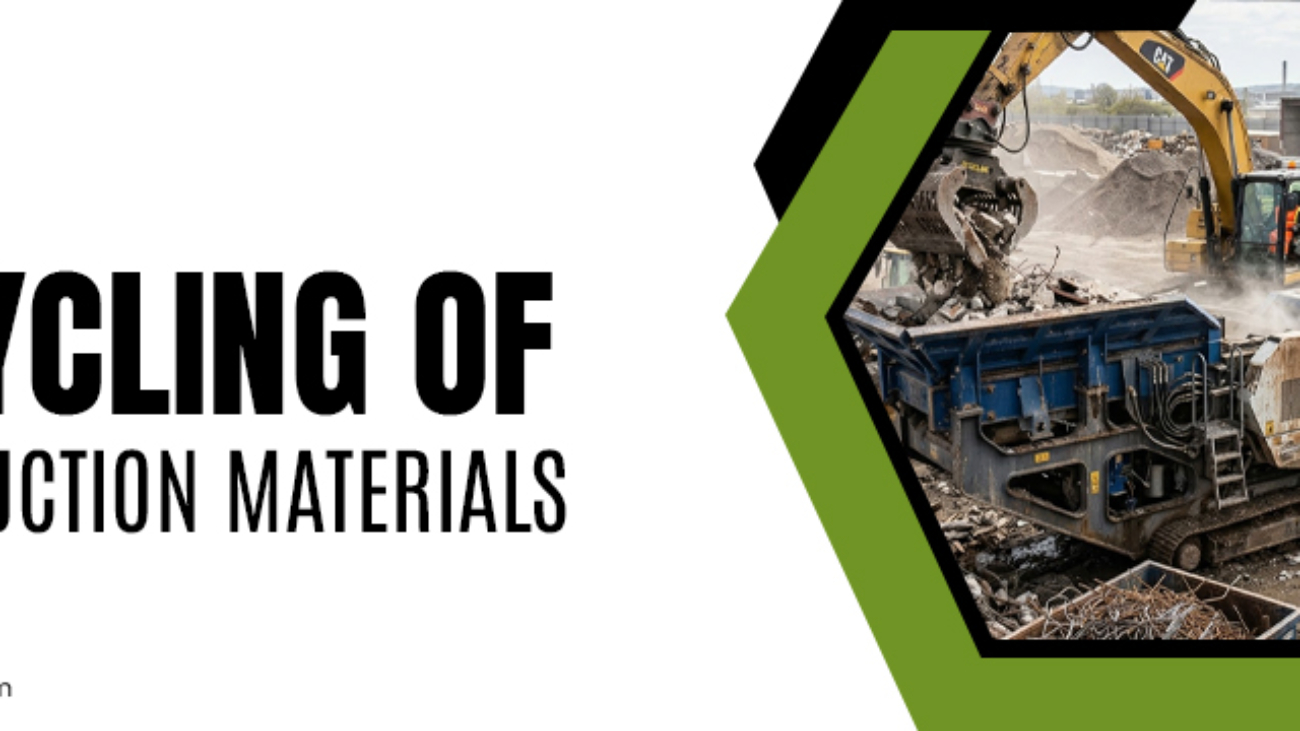
Construction generates large volumes of concrete, asphalt, brick, soil, metal, and debris. Sending every load to a landfill is often unnecessary. Recycling of construction materials gives contractors a practical way to recover useful resources while improving jobsite efficiency.
Recycling is only one part of a well-planned operation. Contractors also need machinery to crush, move, screen, and stockpile recovered materials. This guide explains the recycling used construction materials process, recoverable materials, and equipment choices.
What Is Recycling of Construction Materials?
Recycling materials from construction projects means collecting, processing, and reusing materials from construction, renovation, or demolition work. Instead of treating every load as waste, contractors identify materials with recovery value.
Concrete and asphalt are particularly useful. After suitable crushing and processing, they can become recycled aggregate for approved construction applications. Dirt, topsoil, brick, and metals may also be recovered, reused, or directed to appropriate recycling streams.
For successful recycling of construction materials, the process begins with sorting. Materials are transported or handled with mobile equipment. Crushing and screening follow when required. Good separation reduces contamination.
Benefits of Recycling of building materials for Contractors
A major benefit of recycling of construction materials is resource efficiency. Reuse can reduce dependence on newly extracted aggregates and disposal.
There can be financial advantages as well. Depending on quality, hauling distances, requirements, and specifications, recovered material may reduce disposal, transport, and virgin-material costs.
Furthermore, responsible recycling supports sustainability goals. However, environmental claims should be based on measurable actions.
Which Construction Materials Can Be Recovered?
Concrete and Asphalt
Concrete can be crushed into aggregate-sized material for suitable uses. Asphalt may also be processed for reuse when project specifications allow it. Processing depends on material condition and the intended application.
Dirt, Topsoil, and Brick
Clean excavated soil and topsoil may be useful for grading, fill, or landscaping. Brick can sometimes be reused directly or processed for approved aggregate applications.
Metals and Mixed Debris
Metals can be separated for recovery. Mixed construction debris needs careful sorting because wood, plastics, soil, or other contaminants can affect recycling options.
How Does the Recycling of Construction Materials Process Work?
A disciplined workflow makes material recovery more effective:
- Assess the material: Identify its type, condition, quantity, and possible contaminants.
- Sort at the source: Keep concrete, asphalt, soil, metals, and other streams separate where practical.
- Crush and process: Reduce suitable materials to the required size with appropriate machinery.
- Screen the output: Separate particles by size when the end use requires consistency.
- Store correctly: Protect stockpiles from unnecessary mixing and contamination.
- Reuse or transfer: Move processed material into an approved project use, recycling stream, or disposal route.
This sequence supports recycling of construction materials through clearer tracking.
Essential Equipment for Material Recovery
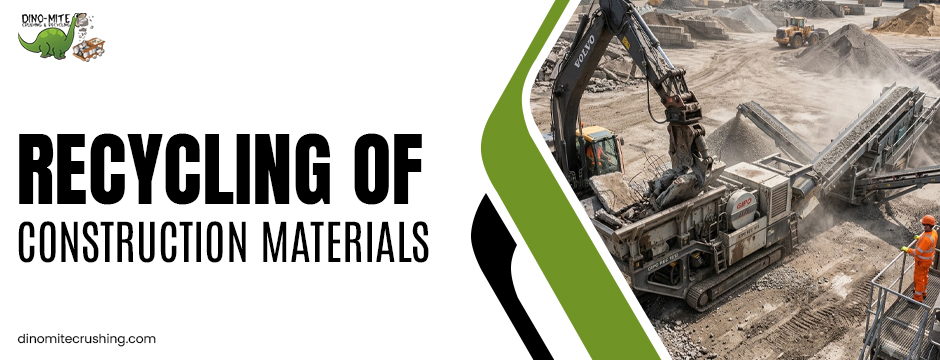
Efficient recycling depends on matching machinery to the work. Crushers process concrete and asphalt. Excavators can feed material, remove unsuitable items, and support excavation. Loaders move processed material and form stockpiles. Screening equipment can separate output into different sizes.
Mobile crushing can help when material is generated onsite. Processing closer to the source may reduce hauling, but access, dust, noise, permits, and local requirements must be assessed.
How Construction Equipment Rental Fits the Plan
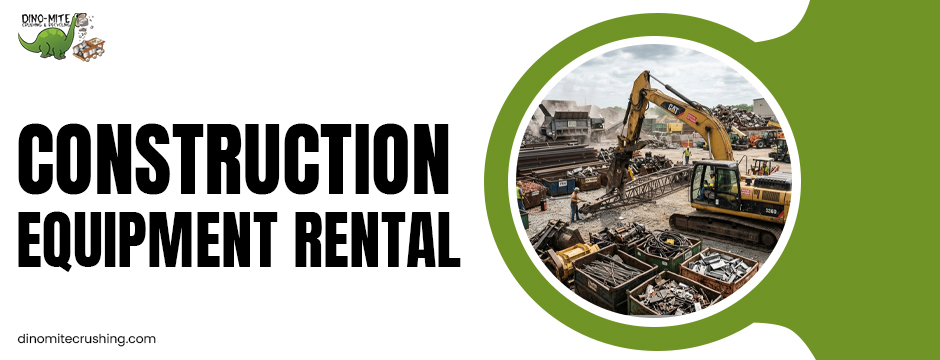
For many contractors, buying every machine is impractical. Construction equipment rental provides specialized machinery without ownership costs.
Before choosing construction equipment rental, assess material type, production target, work area, project duration, and operator requirements. Ask about maintenance records. Confirm delivery and pickup before work starts.
Oversized equipment can increase operating costs and create access challenges. Properly matched machinery can improve productivity while keeping the work area manageable.
Safety and Environmental Compliance
Recycling operations involve heavy machinery, moving vehicles, dust, noise, and changing site conditions. Safe work requires trained operators, equipment inspections, suitable protective equipment, and clear traffic controls.
Environmental compliance is equally important. Requirements vary by material, location, and activity, so contractors should understand rules for storage, transport, emissions, stormwater, and disposal.
Potentially hazardous materials should never be mixed casually with ordinary construction debris. E-waste, for example, requires an appropriate handling route.
Documentation matters. Recording material types, quantities, and destinations supports responsible waste management.
Why Equipment Supply Can Affect Project Efficiency
Equipment availability can influence the workflow. A delayed crusher or loader can leave debris onsite and disrupt other trades. Reliable supply helps coordinate processing with production schedules.
Construction equipment rental is useful for temporary requirements. A demolition contractor may need a crusher for one phase without owning it afterward.
When arranging equipment, clarify specifications, rental duration, delivery timing, maintenance, and pickup procedures. These details reduce confusion.
Practical Tips for Recycling of Construction Materials
Plan before demolition or excavation. Identify recoverable materials and decide where each stream should go.
Keep recyclable materials clean. Mixing soil with concrete can complicate processing and reduce recovered value.
Measure quantities throughout the project. Tracking material helps reveal bottlenecks and creates useful records.
Finally, construction equipment rental should be included in the full cost calculation. Include hauling, labor, disposal, storage, fuel, processing, and material purchases.
Build Smarter with a Trusted Construction Partner
Dino-Mite Crushing delivers dependable solutions for modern construction projects, from recycling concrete, asphalt, dirt, and topsoil to precise mobile, on-site crushing. Its convenient dumping site accepts construction debris, brick, and other materials, while transportation and pickup options simplify logistics. Contractors can also access essential equipment, including sweeping units and water trucks, through flexible rental options. With comprehensive construction material recycling, crushing, disposal, and equipment solutions under one roof, Dino-Mite Crushing helps projects stay efficient, practical, and better prepared.
Building a Smarter Recycling of Construction Materials Strategy
Effective recycling of construction materials works best when it is part of project planning rather than an afterthought. Material assessment, source separation, appropriate crushing, equipment selection, and responsible storage all influence the final result.
For contractors, recycling construction waste materials can support environmental goals and jobsite management. Planning early also makes material routing easier.
In conclusion, recycling of construction materials is more than keeping debris away from landfills. It is a coordinated process for recovering useful resources, improving material efficiency, and supporting responsible construction. With suitable equipment and dependable logistics, it can become a valuable part of a well-managed project.
If you need practical help with recycling, mobile crushing, dumping, transportation, or equipment needs, Dino-Mite Crushing can provide construction-focused solutions tailored to project requirements.