recycling of construction materials

The Ultimate Guide to Recycling of Construction Materials and Equipment Supply

Construction generates large volumes of concrete, asphalt, brick, soil, metal, and debris. Sending every load to a landfill is often unnecessary. Recycling of construction materials gives contractors a practical way to recover useful resources while improving jobsite efficiency.

Recycling is only one part of a well-planned operation. Contractors also need machinery to crush, move, screen, and stockpile recovered materials. This guide explains the recycling used construction materials process, recoverable materials, and equipment choices.
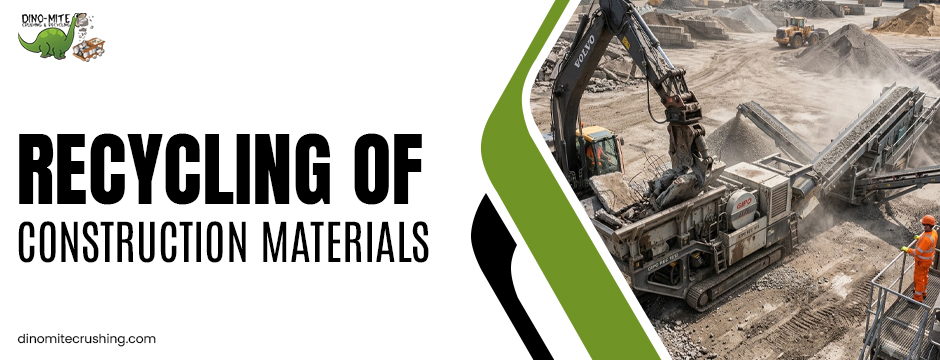
recycling of construction materials

What Is Recycling of Construction Materials?

Recycling materials from construction projects means collecting, processing, and reusing materials from construction, renovation, or demolition work. Instead of treating every load as waste, contractors identify materials with recovery value.

Concrete and asphalt are particularly useful. After suitable crushing and processing, they can become recycled aggregate for approved construction applications. Dirt, topsoil, brick, and metals may also be recovered, reused, or directed to appropriate recycling streams.

For successful recycling of construction materials, the process begins with sorting. Materials are transported or handled with mobile equipment. Crushing and screening follow when required. Good separation reduces contamination.

Benefits of Recycling of building materials for Contractors

A major benefit of recycling of construction materials is resource efficiency. Reuse can reduce dependence on newly extracted aggregates and disposal.

There can be financial advantages as well. Depending on quality, hauling distances, requirements, and specifications, recovered material may reduce disposal, transport, and virgin-material costs.

Furthermore, responsible recycling supports sustainability goals. However, environmental claims should be based on measurable actions.

Which Construction Materials Can Be Recovered?

Concrete and Asphalt

Concrete can be crushed into aggregate-sized material for suitable uses. Asphalt may also be processed for reuse when project specifications allow it. Processing depends on material condition and the intended application.

Dirt, Topsoil, and Brick

Clean excavated soil and topsoil may be useful for grading, fill, or landscaping. Brick can sometimes be reused directly or processed for approved aggregate applications.

Metals and Mixed Debris

Metals can be separated for recovery. Mixed construction debris needs careful sorting because wood, plastics, soil, or other contaminants can affect recycling options.

How Does the Recycling of Construction Materials Process Work?

A disciplined workflow makes material recovery more effective:

  1. Assess the material: Identify its type, condition, quantity, and possible contaminants.
  2. Sort at the source: Keep concrete, asphalt, soil, metals, and other streams separate where practical.
  3. Crush and process: Reduce suitable materials to the required size with appropriate machinery.
  4. Screen the output: Separate particles by size when the end use requires consistency.
  5. Store correctly: Protect stockpiles from unnecessary mixing and contamination.
  6. Reuse or transfer: Move processed material into an approved project use, recycling stream, or disposal route.

This sequence supports recycling of construction materials through clearer tracking.

Essential Equipment for Material Recovery

Efficient recycling depends on matching machinery to the work. Crushers process concrete and asphalt. Excavators can feed material, remove unsuitable items, and support excavation. Loaders move processed material and form stockpiles. Screening equipment can separate output into different sizes.

Mobile crushing can help when material is generated onsite. Processing closer to the source may reduce hauling, but access, dust, noise, permits, and local requirements must be assessed.

How Construction Equipment Rental Fits the Plan

For many contractors, buying every machine is impractical. Construction equipment rental provides specialized machinery without ownership costs.

Before choosing construction equipment rental, assess material type, production target, work area, project duration, and operator requirements. Ask about maintenance records. Confirm delivery and pickup before work starts.

Oversized equipment can increase operating costs and create access challenges. Properly matched machinery can improve productivity while keeping the work area manageable.

Safety and Environmental Compliance

Recycling operations involve heavy machinery, moving vehicles, dust, noise, and changing site conditions. Safe work requires trained operators, equipment inspections, suitable protective equipment, and clear traffic controls.

Environmental compliance is equally important. Requirements vary by material, location, and activity, so contractors should understand rules for storage, transport, emissions, stormwater, and disposal.

Potentially hazardous materials should never be mixed casually with ordinary construction debris. E-waste, for example, requires an appropriate handling route.

Documentation matters. Recording material types, quantities, and destinations supports responsible waste management.

Why Equipment Supply Can Affect Project Efficiency

Equipment availability can influence the workflow. A delayed crusher or loader can leave debris onsite and disrupt other trades. Reliable supply helps coordinate processing with production schedules.

Construction equipment rental is useful for temporary requirements. A demolition contractor may need a crusher for one phase without owning it afterward.

When arranging equipment, clarify specifications, rental duration, delivery timing, maintenance, and pickup procedures. These details reduce confusion.

Practical Tips for Recycling of Construction Materials

Plan before demolition or excavation. Identify recoverable materials and decide where each stream should go.

Keep recyclable materials clean. Mixing soil with concrete can complicate processing and reduce recovered value.

Measure quantities throughout the project. Tracking material helps reveal bottlenecks and creates useful records.

Finally, construction equipment rental should be included in the full cost calculation. Include hauling, labor, disposal, storage, fuel, processing, and material purchases.

Build Smarter with a Trusted Construction Partner

Dino-Mite Crushing delivers dependable solutions for modern construction projects, from recycling concrete, asphalt, dirt, and topsoil to precise mobile, on-site crushing. Its convenient dumping site accepts construction debris, brick, and other materials, while transportation and pickup options simplify logistics. Contractors can also access essential equipment, including sweeping units and water trucks, through flexible rental options. With comprehensive construction material recycling, crushing, disposal, and equipment solutions under one roof, Dino-Mite Crushing helps projects stay efficient, practical, and better prepared.
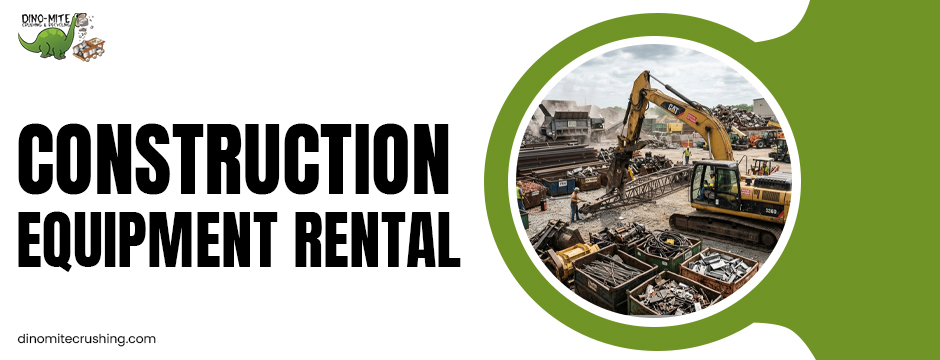
construction equipment rental

Building a Smarter Recycling of Construction Materials Strategy

Effective recycling of construction materials works best when it is part of project planning rather than an afterthought. Material assessment, source separation, appropriate crushing, equipment selection, and responsible storage all influence the final result.

For contractors, recycling construction waste materials can support environmental goals and jobsite management. Planning early also makes material routing easier.

In conclusion, recycling of construction materials is more than keeping debris away from landfills. It is a coordinated process for recovering useful resources, improving material efficiency, and supporting responsible construction. With suitable equipment and dependable logistics, it can become a valuable part of a well-managed project.

If you need practical help with recycling, mobile crushing, dumping, transportation, or equipment needs, Dino-Mite Crushing can provide construction-focused solutions tailored to project requirements.
construction industry in michigan

Construction Industry in Michigan: Smart Ways to Improve Project Efficiency and Reduce Costs

Improving construction efficiency means completing work with less wasted time, material, equipment use, and unnecessary hauling. In the construction industry in Michigan, contractors can control project costs by planning material supply, recycling, transportation, equipment rental, crushing, and jobsite services together.

A well-organized project does not depend on speed alone. It depends on having the right resources available at the right stage. For example, recycling suitable concrete and asphalt can reduce disposal needs, while mobile crushing may limit the number of material-hauling trips.

construction industry in michigan

What Are the Best Ways to Reduce Construction Costs in Michigan?

The most practical cost-control measures include accurate material planning, recycling suitable construction waste, using on-site crushing when appropriate, coordinating transportation, renting equipment when ownership is unnecessary, and maintaining an organized jobsite.

These measures address common sources of avoidable expense. They also help contractors manage materials from delivery through disposal or reuse.

Construction Industry in Michigan: Key Areas for Better Project Efficiency

1. Plan Construction Materials Before Work Begins

Material planning should start before crews arrive at the site. Estimate quantities using current project measurements and specifications.

Common requirements can include:

  • Aggregates
  • Topsoil
  • Concrete
  • Asphalt
  • Construction fill
  • Other project-specific materials

Ordering too much material can create storage and handling issues. Ordering too little can interrupt work and require additional deliveries.

For concrete construction MI projects, accurate quantity estimates are particularly useful when concrete work is connected with demolition, site preparation, or material recovery.

2. Consider Mobile On-Site Crushing

Demolition can leave a construction industry in Michigan project with substantial amounts of concrete and asphalt. Sending all of these materials away and purchasing replacement aggregate can increase transportation and disposal costs.

Mobile crushing provides an alternative for suitable materials. A crushing unit can process recovered material at or near the project site according to required specifications.

The main benefit is fewer material-handling stages. Depending on the project, this may reduce hauling requirements and make recovered materials more useful.

3. Make Recycling Part of the Project Plan

Construction recycling works best when it is planned before demolition or excavation begins.

Concrete, asphalt, dirt, and topsoil can potentially be recovered or processed rather than immediately treated as waste. Material condition and project specifications should determine whether reuse or recycling is appropriate.

For concrete construction MI, separating recyclable material from general construction debris can make material management more efficient.

A simple process is:

  1. Identify recoverable materials.
  2. Separate different material types.
  3. Determine whether materials can be reused or recycled.
  4. Arrange processing, pickup, or transportation.
  5. Dispose of materials that cannot be recovered.

This approach creates a clearer material stream and can reduce unnecessary disposal.

Coordinate Transportation With the Construction Schedule

Transportation affects both cost and productivity. A truck arriving too early may have to wait on site. A late delivery can leave workers and equipment idle.

Consequently, coordinate transportation with actual project activities.

Contractors should consider:

  • Pickup and delivery windows
  • Loading access
  • Material quantities
  • Travel requirements
  • Site readiness
  • Disposal or recycling destinations

Pickup services can also help when broken concrete, asphalt, dirt, brick, or construction debris needs to leave the property.

Rent Equipment When Ownership Is Not Practical

Construction equipment represents a significant investment. Purchasing machinery for occasional use may not make financial sense for every contractor or project.

Equipment rental in the construction industry in Michigan provides access to machinery without requiring long-term ownership. Available equipment may include excavators and loaders, depending on the provider.

Before renting, confirm the machine’s size, capacity, operating requirements, and expected hours of use. The right equipment should match the actual task rather than simply being the largest machine available.

Equipment Selection Matters

An excavator may be appropriate for excavation or material handling, while a loader can support aggregate movement and loading operations.

Matching machinery to the job can improve productivity and reduce unnecessary operating costs.

Keep the Jobsite Clean and Control Dust

Site conditions affect daily productivity and safety. Accumulated debris can interfere with vehicle movement and material handling.

Sweeping units can help keep active construction areas cleaner. They are particularly useful when projects generate loose material around access roads, loading areas, or work zones.

Water trucks provide another form of jobsite support. They can be used for dust-control activities and other water-related construction requirements.

For concrete construction MI, combining suitable cleanup and dust-control measures with planned material handling can help maintain more workable site conditions.

Use a Dedicated Dumping and Disposal Solution

Some construction materials cannot be reused on the same project. A designated dumping site can provide an organized destination for materials that require disposal or further processing.

Typical materials may include:

  • Broken concrete
  • Asphalt
  • Dirt
  • Brick
  • Construction debris

Before transporting materials, contractors should confirm what the facility accepts and whether any project-specific requirements apply.

Furthermore, separating reusable materials from disposal loads can make the waste stream easier to manage.

Construction Industry in Michigan: Build a More Efficient Workflow

Efficiency improves when individual services are connected to the project’s timeline.

For example, a demolition phase may generate concrete and asphalt. Those materials could then move into recycling or crushing. Earthwork may require aggregate, topsoil, transportation, and water support. Final site work may require sweeping.

This phase-based approach prevents every service from being treated as a separate task.

Create a Pre-Project Checklist

Before mobilization, review:

  • Material quantities and specifications
  • Recycling opportunities
  • On-site crushing requirements
  • Transportation and pickup needs
  • Equipment requirements
  • Dumping arrangements
  • Sweeping needs
  • Dust-control requirements

A checklist gives project managers a practical way to identify gaps before they become delays.

How Integrated Construction Services Can Lower Costs

The construction industry in Michigan can benefit when material supply, recycling, crushing, transportation, disposal, and equipment support are coordinated rather than handled independently.

An integrated approach can reduce unnecessary movement between project stages. It can also make scheduling easier because material and service requirements are identified earlier.

However, no single solution fits every site. Contractors should consider material condition, project specifications, access, equipment requirements, schedule, and applicable regulations before selecting a service.

Reliable Construction Solutions for the Construction Industry in Michigan

For projects across the construction industry in Michigan, Dino-Mite Crushing delivers practical support from material supply to jobsite cleanup. Our services include construction materials supply, recycling, mobile on-site crushing, dumping, transportation, equipment rentals, sweeping units, and water trucks. This integrated approach helps contractors manage materials, reduce unnecessary hauling, and keep projects moving efficiently. With dependable solutions tailored to real jobsite needs, Dino-Mite Crushing is a trusted resource for contractors seeking efficient, cost-conscious construction services throughout Michigan.

A Practical Approach to Construction Cost Control

Cost-effective construction starts with decisions made before work begins. Accurate material planning helps prevent shortages. Recycling can divert suitable materials from disposal. On-site crushing can reduce certain hauling requirements. Equipment rental can provide flexibility, while transportation, sweeping, and water-truck services support day-to-day operations.

In conclusion, the construction industry in Michigan can improve project efficiency by treating materials, equipment, transportation, recycling, and site management as connected parts of one workflow.

For contractors seeking these services, Dino-Mite Crushing provides construction material supply, recycling, mobile on-site crushing, dumping, transportation and pickup, equipment rentals, sweeping units, and water trucks. Reviewing these options against your project’s actual requirements can help create a practical support plan without adding unnecessary services.

concrete construction MI

Frequently Asked Questions

How can construction companies reduce project costs?

Companies can reduce costs by improving material estimates, recycling suitable materials, limiting unnecessary transportation, choosing appropriate equipment, and coordinating services with the project schedule.

What materials can construction sites recycle?

Depending on their condition and applicable requirements, common recyclable construction materials include concrete, asphalt, dirt, and topsoil. Brick and other debris may require separate handling.

When is on-site crushing useful?

On-site crushing can be useful when a project generates suitable quantities of concrete or asphalt that can be processed near the jobsite. The processed material must meet the project’s applicable specifications before reuse.

Why rent construction equipment?

Renting can provide access to excavators, loaders, and other machinery without the long-term costs associated with purchasing and maintaining equipment that may only be needed temporarily.