construction industry in michigan

Construction Industry in Michigan: Top Services for Builders

Michigan construction projects rarely fail because of one dramatic mistake. More often, trouble starts with small gaps in planning: a delayed aggregate delivery, poorly managed debris, or equipment arriving too late. Understanding the services supporting the construction industry in Michigan helps builders control costs, protect schedules, and make better material decisions.

From material supply and mobile crushing to transportation, recycling, dumping, and equipment rental, contractors have several ways to improve efficiency. The key is knowing which service fits the job and when to use it.
What Builders Need From the Construction Industry in Michigan

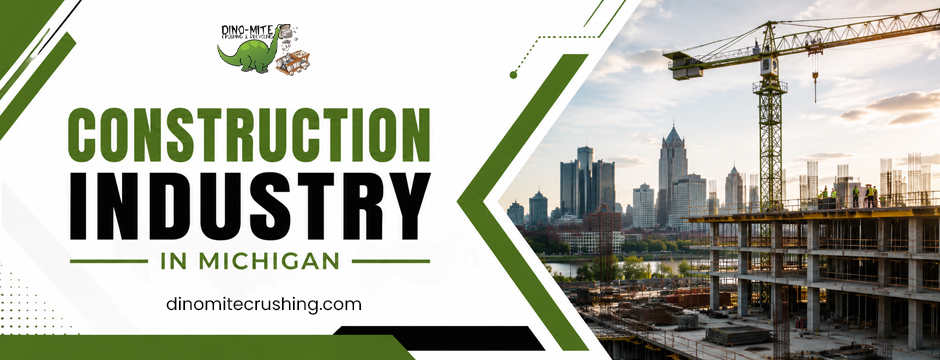
A construction site depends on more than labor and machinery. Materials must arrive in the right quantity. Waste must leave safely. Reusable resources should be processed properly. Heavy equipment needs dependable transportation.

These tasks are closely connected. For example, a demolition project may generate concrete and asphalt that can be crushed on-site. The resulting aggregate may then be reused for grading or another suitable application. This can reduce hauling requirements and keep usable material in circulation.

However, every project has different site conditions, quantities, specifications, and local requirements. Builders should evaluate services according to the actual scope of work rather than choosing an option based only on price.

Top Services Supporting Michigan Builders

1. Construction Material Supply

Reliable material supply is one of the foundations of a well-managed project. Builders may need concrete, cement, aggregates, sand, gravel, soil, topsoil, and other materials at different stages.

A dependable supplier should provide clear specifications and predictable delivery. That matters when crews are scheduled around a concrete pour, grading operation, or site preparation task.

Before ordering, confirm the material type, quantity, size, delivery location, and intended use. For aggregate, verify that the material suits the application. A low price has little value if the product fails to meet project requirements.

2. On-Site Crushing

On-site crushing is useful when a project produces large amounts of concrete, asphalt, brick, stone, or similar material.

Portable crushing equipment can be brought directly to the jobsite. Instead of hauling every load to an off-site facility, suitable material can be processed where it is generated. This can reduce truck trips and simplify site logistics.

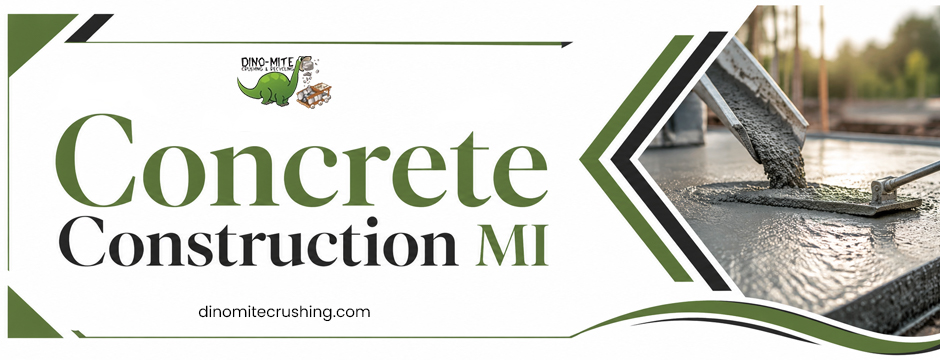
For concrete construction MI, on-site crushing may also support material reuse when processed aggregate meets required specifications. Contractors should confirm engineering requirements before incorporating recycled material into a particular application.

3. Recycling Services

Construction and demolition generate significant quantities of recoverable material. Recycling services help separate this waste from material that genuinely requires disposal.

Concrete and asphalt are particularly suitable for recycling when they can be processed into usable aggregate. Metals may also be recovered, while other materials require different handling methods.

The benefit is not simply environmental. Recycling can improve material management and reduce dependence on virgin resources. Furthermore, documented recycling can help project teams understand where waste goes and how much material is diverted.

4. Dumping Site Services

Not everything from a construction site can be reused. Some debris must be transported to an appropriate disposal location.

A dedicated dumping site can simplify this part of the workflow. Builders can bring accepted construction and demolition materials to a centralized facility instead of arranging multiple disposal destinations.

Before making a trip, ask what materials are accepted, whether loads require separation, what documentation is needed, and how charges are calculated. These details help prevent rejected loads and unexpected costs.

5. Transportation and Hauling

Material movement is a major part of construction logistics. Trucks may be needed to deliver aggregates, sand, gravel, recycled materials, water, equipment, or machinery.

Good transportation planning starts before the truck arrives. Consider access roads, delivery windows, turning space, site conditions, load requirements, and unloading procedures.

Consequently, a transportation provider should understand construction logistics rather than simply moving cargo between addresses. Coordinated scheduling can keep crews productive and reduce idle time.

6. Equipment Rental

Buying every machine required for a short-term project is rarely practical. Equipment rental gives contractors access to specialized tools without committing capital to long-term ownership.

Depending on the project, rental needs may include water trucks, sweeping equipment, crushers, and other construction machinery. The right equipment can improve site preparation, dust control, cleanup, and material processing.

Before renting, check the machine’s capacity, operating requirements, availability, delivery arrangements, and expected working conditions. Operators should also understand applicable safety procedures.

How to Select the Right Service

The best service depends on the project’s material flow and schedule.

Start by identifying what enters the site, what is generated during construction, and what leaves the site. Then map each material to its intended destination. This simple exercise can reveal opportunities for recycling, on-site processing, or consolidated hauling.

For example, a demolition contractor may have concrete available in large quantities. Crushing it near the project could make more sense than repeatedly transporting it elsewhere. A new-build contractor, meanwhile, may place greater emphasis on scheduled aggregate deliveries and equipment availability.

For concrete construction MI, specifications should remain the priority. Recycled aggregate can be valuable, but its suitability depends on the application, required performance, and project specifications.

Practical Ways to Improve Construction Logistics

Plan Material Quantities Early

Accurate quantity estimates reduce emergency deliveries and excess material. Keep records as the project develops because site conditions can change.

Separate Recyclable Materials

Mixed debris is harder to process efficiently. Where practical, separate concrete, asphalt, metals, and other recoverable materials at the source.

Coordinate Trucks With Site Activity

A truck that arrives too early can wait. One that arrives too late can hold up a crew. Delivery windows should match actual site readiness.

Review Disposal Requirements

Do not assume every facility accepts every type of debris. Confirm requirements before loading trucks.

Track Costs by Material Stream

Separate spending for new materials, transportation, recycling, disposal, and equipment. This makes it easier to identify where savings may be possible.

Sustainability Is a Practical Construction Advantage

Sustainable construction is not limited to environmentally friendly products. It also involves reducing unnecessary hauling, recovering usable materials, and making efficient use of existing resources.

Crushing and recycling can turn selected construction debris into useful aggregate. Fewer transport movements can also reduce fuel use associated with moving material. These measures should be evaluated against technical specifications and project economics.

The construction industry in Michigan is supported by an interconnected network of suppliers, recyclers, haulers, disposal facilities, and equipment providers. Builders who coordinate these services carefully can create a cleaner and more predictable workflow.

Questions Builders Should Ask

What materials do you handle?
Confirm accepted materials and product specifications before committing to a supplier or recycling service.

Can services be customized?
Ask whether quantities, delivery schedules, crushing requirements, or waste plans can be adjusted to the project.

How are transportation costs calculated?
Clarify whether pricing depends on distance, load size, frequency, equipment, or other factors.

What happens to recyclable material?
A clear answer helps contractors evaluate environmental performance and material recovery.

Are operations compliant with applicable requirements?
Ask about relevant safety, environmental, and disposal procedures.

What This Means for Builders

The modern construction industry in Michigan requires more than skilled crews and quality materials. Efficient projects depend on coordinated material supply, processing, transportation, recycling, disposal, and equipment access.

The right combination can reduce avoidable delays and improve control over project resources. However, services should always be selected according to specifications, site conditions, safety requirements, and budget.

Your Trusted Partner for Concrete Construction MI

Dino-Mite Crushing is a dependable partner for contractors seeking quality materials and practical construction solutions. From recycled concrete and aggregates to mobile on-site crushing, dumping, transportation, and equipment rentals, our services support projects from preparation through completion. 

With a strong focus on reliability, sustainability, and responsive service, we help builders manage materials efficiently and reduce unnecessary waste. For concrete construction MI, choose a team committed to delivering flexible solutions that align with your project’s requirements and schedule.
Final Thoughts 

In conclusion, builders can gain a practical advantage by treating construction support services as part of project planning rather than as last-minute solutions. With careful coordination, waste can become a resource, transportation can become more predictable, and equipment can be matched to actual needs.

For builders seeking one partner for construction materials, recycling, on-site crushing, dumping, transportation, and equipment rental, Dino-Mite Crushing offers a practical way to coordinate these needs and keep projects moving efficiently.
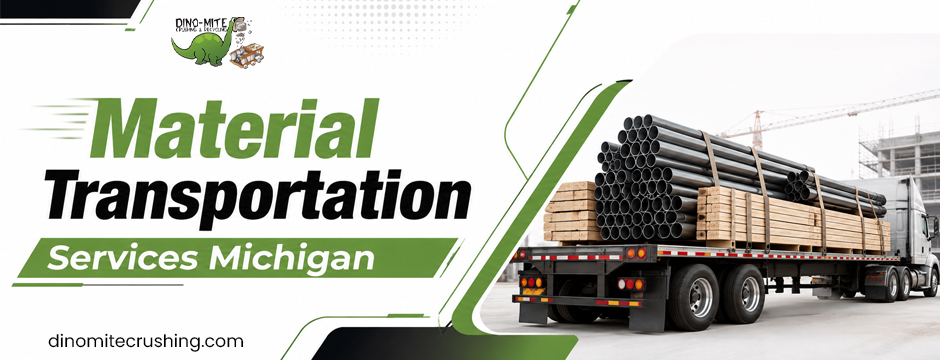
material transportation services michigan

Your Complete Business Guide On Material Transportation Services Michigan

The success of building ventures relies on factors beyond just expert labor and high-grade resources. They also need a reliable way to move aggregates, equipment, machinery, and waste between locations. A delay in transportation can affect several stages of a project at once. That is why Material transportation services Michigan are an important part of construction planning.

From sand and gravel to recycled aggregates and heavy machinery, each load requires the right vehicle, route, and handling method. Furthermore, transportation needs can change as a project moves from excavation to construction and cleanup. Understanding these services can help contractors plan better, control costs, and avoid unnecessary delays.

material transportation services michigan

What Are Material Transportation Services?

Material transportation covers the movement of construction-related materials and equipment from one location to another. This may include transporting aggregates from a crushing facility to a jobsite, moving machinery between projects, or removing construction debris.

The process is not simply about loading a truck and driving to the destination. Load type, quantity, distance, road conditions, equipment requirements, and delivery schedules all need consideration.

For example, loose aggregate may require a suitable dump truck, while heavy machinery may need specialized transportation equipment. Consequently, choosing the right transport method is essential for safe and efficient project operations.

Material Transportation Services Michigan for Construction Projects

Material transportation services Michigan can support residential, commercial, roadwork, demolition, and other construction activities.

Aggregate and Material Delivery

Aggregates are widely used for foundations, road bases, drainage systems, concrete production, and landscaping. Common materials include sand, gravel, crushed stone, and recycled aggregates.

Reliable delivery helps contractors maintain a steady supply at the jobsite. Instead of storing excessive quantities, materials can be scheduled according to project requirements. This can improve site organization and reduce unnecessary handling.

Equipment and Machinery Transportation

Construction equipment often needs to move from one project to another. Excavators, crushers, loaders, and other machinery can be difficult to relocate without appropriate transportation resources.

A professional transportation provider assesses the size and weight of the equipment before determining the suitable vehicle. Access conditions also matter. Narrow roads, low clearances, weight restrictions, and difficult entrances can influence the transportation plan.

Why Timely Delivery Matters

Construction schedules are closely connected. If a required material does not arrive on time, crews may have to wait. That can affect labor costs, equipment use, and subsequent activities.

This is why Material transportation services Michigan should be evaluated based on reliability as well as price. A dependable provider should understand delivery windows and communicate clearly when circumstances change.

For larger projects, scheduled deliveries can help maintain workflow. Just-in-time transportation may also reduce the need for excessive material storage at the site.

How Transportation Planning Works

Good transportation begins before the truck reaches the jobsite.

Assessing the Load

The first step is identifying what needs to be transported. The material type, volume, weight, and dimensions determine the appropriate transportation method.

Heavy or oversized equipment may require different handling than loose aggregates. Accurate information also helps prevent problems caused by an unsuitable vehicle.

Planning the Route

Choosing the most direct path does not guarantee the most efficient travel. Transportation planners may need to consider bridge clearances, road restrictions, traffic patterns, construction zones, and access to the destination.

For larger loads, these details become particularly important. A route that works for a passenger vehicle may not be practical for a heavily loaded construction truck.

Coordinating Delivery

Communication between the contractor and transportation provider is equally important. Delivery times should match site readiness, available unloading space, and the project’s working schedule.

Furthermore, changes should be communicated quickly. A well-coordinated delivery reduces confusion and keeps material movement predictable.

The Role of On-Site Crushing

Not every construction project needs to transport waste away from the site. Concrete, asphalt, bricks, and stones can sometimes be processed where they are generated.

An on-site crushing service brings portable crushing equipment directly to the project. Materials can then be processed into reusable aggregate instead of being transported to an off-site facility.

This approach can reduce hauling requirements and may lower disposal and material purchasing costs. It can also support recycling goals by giving suitable construction waste another useful purpose.

Cost Factors to Consider

The cost of transportation depends on several factors. Distance is one consideration, but it is not the only one.

Load size, material type, vehicle requirements, delivery frequency, access conditions, and special handling can all influence the final cost. Heavy or specialized loads may require additional planning.

Therefore, contractors should request clear pricing before transportation begins. A transparent quote makes it easier to prepare an accurate project budget.

It is also useful to compare the cost of transportation with alternative options. In some situations, processing material at the project location through an on-site crushing service may reduce hauling and disposal expenses.

Safety During Material Transportation

Construction transportation involves moving heavy loads around workers, equipment, public roads, and active job sites. Safety should therefore remain a central consideration.

Loads need to be properly contained or secured according to their type. Vehicles should also be suitable for the weight and dimensions being carried.

Drivers and operators must remain aware of changing site conditions. Clear communication with site personnel can help prevent conflicts during loading and unloading.

For specialized equipment, proper loading procedures are particularly important. Incorrect positioning or inadequate securement can create serious risks during transit.

Environmental Benefits of Better Transportation

Transportation planning can also support environmental goals. Efficient routing may reduce unnecessary fuel consumption and travel time.

Recycling construction materials can provide another environmental advantage. Instead of sending suitable concrete or asphalt directly to disposal facilities, an on-site crushing service can process these materials for potential reuse.

Recycled aggregates may be suitable for certain applications depending on project specifications and applicable requirements. This can reduce reliance on newly sourced materials while making productive use of construction waste.

Choosing the Right Transportation Provider

When comparing Material transportation services Michigan, look beyond the basic delivery price.

First, check whether the provider has vehicles suitable for your materials or equipment. Next, consider experience with construction projects and specialized loads.

Ask about delivery scheduling, safety practices, insurance, and communication procedures. For larger projects, the provider should be able to coordinate multiple deliveries without creating unnecessary disruption.

It is also worth considering whether the company offers related services. A provider that can support material transportation, waste removal, crushing, or equipment movement may simplify project logistics.

Common Mistakes to Avoid

One common mistake is providing inaccurate information about the load. Incorrect dimensions or quantities can result in unsuitable equipment and scheduling problems.

Another mistake is waiting until the last minute to arrange transportation. Construction schedules can change quickly, but planning gives providers more opportunity to organize the right resources.

Finally, do not select a provider based only on the lowest quote. Reliability, safety, equipment suitability, and communication can have a much greater effect on the actual project cost.

Keep Your Construction Logistics Moving

At Dino-Mite Crushing, we help construction teams manage material transportation with dependable, practical solutions. We transport aggregates, construction materials, equipment, machinery, and project waste while focusing on safe handling and timely delivery. Our services can also support recycling needs through on-site crushing, helping reduce unnecessary hauling and disposal. 

We understand that every project has different logistics requirements, so we work around your schedule, load, and site conditions. Choose us for efficient transportation and crushing support.

On-Site Crushing service

Conclusion

Effective construction logistics depend on keeping materials, machinery, and waste moving at the right time. Material transportation services Michigan can help contractors coordinate these activities while supporting safer and more organized jobsites.

Before choosing a provider, assess your load, delivery schedule, route requirements, equipment needs, and budget. Also consider whether recycling or on-site processing could reduce unnecessary hauling.

For construction companies seeking dependable transportation, material handling, recycling, and crushing support, Dino-Mite Crushing offers solutions designed around practical project requirements. Contact us to discuss your material transportation needs and find a suitable approach for your next construction project.

FAQs

1. What do material transportation services include?
They can include transporting aggregates such as sand, gravel, crushed stone, and recycled materials. Services may also cover construction equipment, machinery, and project-related waste. The right transportation method depends on the load’s size, weight, type, and destination.

2. How can timely material delivery benefit my project?
Timely deliveries help prevent work stoppages and keep construction activities moving according to schedule. Proper delivery coordination can also reduce unnecessary onsite storage and improve overall project organization.

3. What factors affect transportation costs?
Distance, load size, material type, vehicle requirements, delivery frequency, site access, and special handling can all affect transportation costs. Requesting a transparent quote helps with accurate budgeting.

4. Can construction waste be processed at the jobsite?
Yes. Suitable materials such as concrete, asphalt, bricks, and stones can potentially be processed using an on-site crushing service, reducing hauling and disposal requirements.

5. How should I choose a transportation provider?
Consider equipment suitability, construction experience, scheduling reliability, safety practices, insurance, communication, and pricing. A provider offering related services can also simplify project logistics.