
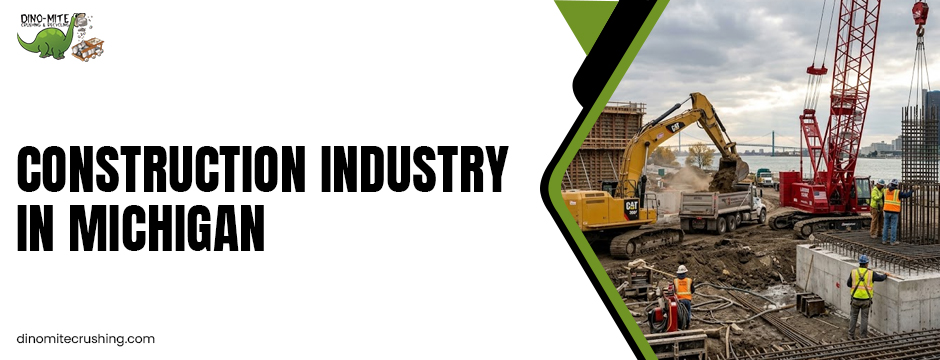
The construction industry in Michigan depends on reliable materials, efficient equipment, and responsible waste management to keep projects moving. From road improvements and commercial developments to residential construction and demolition, every job produces material that must be handled correctly. Concrete, asphalt, bricks, soil, and other debris can quickly occupy valuable space when there is no clear disposal plan.
As a construction services business owner, I understand that contractors need practical solutions that control expenses without slowing down their work. Crushing, recycling, and organized waste disposal can help achieve that balance. With the right approach, construction debris can become a useful resource instead of an unnecessary burden. The result is a cleaner jobsite, better material utilization, and a more organized construction process.
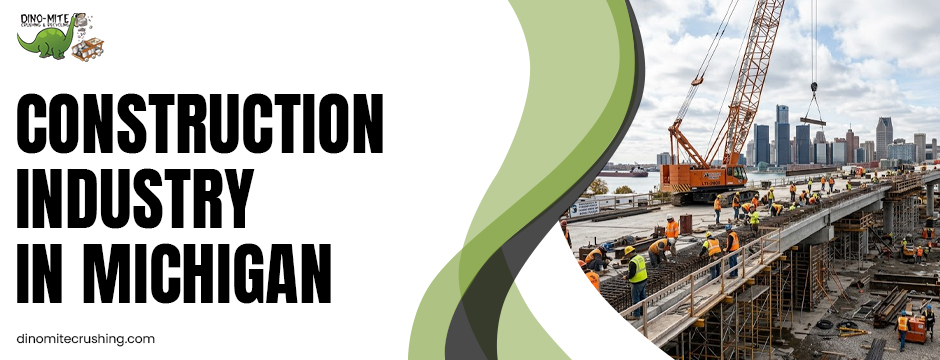
Understanding Material Management in the Construction Industry in Michigan
Construction projects involve several connected activities. Materials arrive at the site, equipment moves them into position, and leftover debris must be removed or processed. When these activities are poorly coordinated, contractors may face additional hauling costs, crowded work areas, and avoidable delays.
Michigan projects also vary significantly in their requirements. A road contractor may handle large volumes of asphalt, while a demolition team may need to process broken concrete and masonry. Residential builders might require clean fill, aggregates, and topsoil.
Therefore, material management should begin during project planning. Identify the expected waste streams, estimate the volume of debris, and determine which materials can be reused, recycled, or sent to an appropriate disposal facility.
1. On-Site Crushing for Faster Project Progress
Turn Demolition Debris Into Reusable Material
Concrete and asphalt often remain after demolition, pavement removal, and structural renovations. Instead of automatically hauling everything away, contractors can evaluate whether suitable material can be crushed and reused.
On-site crushing processes turn eligible material into smaller, more manageable aggregate. Depending on its composition, quality, and intended application, the resulting material may be suitable for road base, temporary access routes, or other construction purposes.
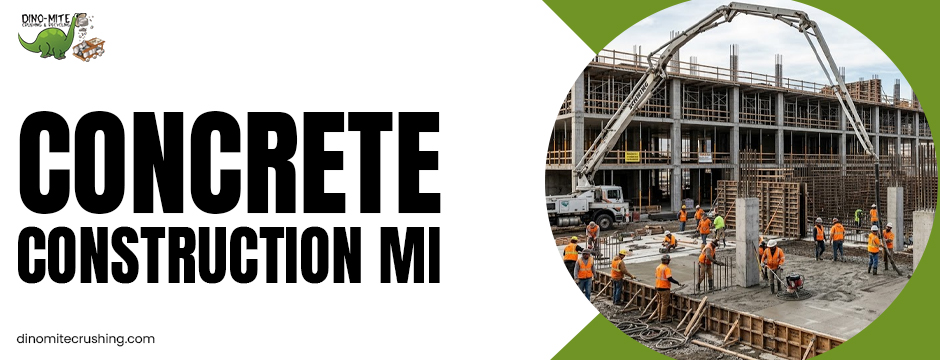
For concrete construction MI, crushing can be particularly useful when a project generates substantial quantities of concrete rubble. Processing material near its source may reduce the number of trips required to transport debris away and bring replacement aggregate back.
However, not every load is suitable for every application. Reinforcement steel, excessive contamination, and inconsistent material quality can affect processing. Contractors should establish the required aggregate specifications before crushing begins.
When Does Mobile Crushing Make Sense?
Mobile crushing is worth considering when a site produces enough suitable material to justify bringing crushing equipment to the project. It can be useful for demolition sites, roadwork, commercial redevelopment, and large excavation projects.
Before arranging the service, confirm site access, equipment clearance, processing capacity, material quantities, and noise or dust-control requirements. These details help determine whether on-site processing offers a genuine operational advantage.
2. Construction Recycling That Supports Resource Efficiency
Recycling helps contractors recover value from materials that might otherwise become waste. It also reduces dependence on newly extracted resources when recycled products meet the requirements of a project.
Concrete and Asphalt Recycling
Recycled concrete can serve as an aggregate source for approved applications. Reclaimed asphalt pavement may also be incorporated into suitable asphalt mixtures or other permitted uses, depending on its condition and the applicable specifications.
The key is proper sorting. Keeping concrete, asphalt, soil, and general demolition debris separated makes processing more predictable. It can also reduce contamination that might prevent a recovered material from being accepted by a recycling facility.
Furthermore, contractors should verify the intended use and applicable Michigan requirements before reusing processed materials. Environmental conditions and project specifications can affect where recycled aggregates are appropriate.
Soil and Topsoil Recovery
Excavation frequently produces excess soil. Where practical, suitable soil can be retained for grading, landscaping, or other approved site work. Topsoil should generally be separated from unsuitable fill and protected from contamination.
This approach is particularly useful for projects that involve landscaping, drainage improvements, or extensive ground preparation. Instead of treating every excavated load as waste, contractors can assess its potential value before arranging removal.
3. Responsible Waste Disposal for Construction Sites
Recycling cannot accommodate every material. Some debris may be contaminated, unsuitable for processing, or prohibited from reuse in a particular application. Responsible disposal remains essential in these situations.
Organize Waste Before It Leaves the Site
A clear disposal process starts with identifying what the project generates. Establish separate collection areas for concrete, asphalt, clean soil, scrap metal, and mixed debris where site conditions allow.
Next, confirm the receiving facility’s acceptance rules. Ask about prohibited materials, load requirements, contamination limits, and any documentation needed for delivery. Never assume that every facility accepts every type of construction waste.
For concrete construction MI, these checks are important when demolition produces mixed loads containing masonry, reinforcing steel, soil, or other unwanted materials. Proper separation helps prevent rejected loads and unnecessary return trips.
Contractors should also use authorized disposal channels and follow applicable waste-handling requirements. Materials that may contain hazardous substances need appropriate assessment and handling rather than ordinary construction debris disposal.
4. Aggregate Supply and Transportation: Connecting Every Stage
Crushing and recycling are only part of an efficient material strategy in the construction industry in Michigan. Projects also need dependable access to suitable aggregates and transportation services.
Choose Materials According to the Application
Sand, gravel, crushed stone, and topsoil each serve different purposes. Crushed aggregate may support base preparation, while sand can be used in specific bedding or construction applications. Topsoil is generally intended for landscaping and growing environments rather than structural fill.
Always match material selection to the project’s engineering requirements. Check grading, cleanliness, moisture conditions, and other specifications when relevant.
Coordinate Deliveries and Hauling
Transportation decisions can influence project schedules and operating costs. Delivery timing should match site capacity, equipment availability, and the pace of installation.
For example, arranging aggregate deliveries shortly before a crew needs the material can help prevent stockpiles from obstructing access routes. Similarly, coordinating debris removal with demolition progress can reduce congestion around loading areas.
The construction industry in Michigan benefits when material supply, crushing, hauling, and disposal are planned as connected activities instead of separate arrangements.
5. Equipment and Site Services That Improve Efficiency
Construction operations often require excavators, loaders, dump trucks, and other specialized equipment. Renting machinery can provide flexibility when a project needs equipment for a defined period rather than throughout the year.
However, contractors should compare more than the rental rate. Consider transportation, fuel, operator requirements, maintenance responsibilities, and the expected duration of use. Confirm that the machine is suitable for the site’s working conditions.
Jobsite maintenance deserves similar attention. Sweeping equipment can help control loose debris on access roads, while water trucks may assist with dust suppression when conditions permit. Appropriate dust controls should reflect the material being handled, local requirements, and nearby activities.
These services help maintain orderly working conditions and support safer movement around active sites.
6. How to Build a Smarter Construction Waste Plan
A practical plan does not need to be complicated. It needs clear responsibilities and realistic decisions.
Follow These Five Steps
- Estimate material volumes: Identify expected quantities of concrete, asphalt, soil, and mixed debris before work begins.
- Separate recoverable materials: Establish designated areas for suitable recycling streams and prevent unnecessary contamination.
- Compare processing options: Evaluate on-site crushing against off-site recycling and disposal, considering transport distances, equipment costs, and project duration.
- Arrange logistics early: Confirm delivery schedules, hauling capacity, receiving-facility rules, and equipment access.
- Track actual results: Review rejected loads, unused materials, hauling frequency, and disposal expenses to identify opportunities for improvement.
For concrete construction MI, this planning process can help contractors make better decisions about retaining, processing, transporting, and disposing of concrete from the outset.
Your Trusted Partner for Construction Materials and Crushing Services in Michigan
When your project demands reliable materials and efficient waste management, Dino-Mite Crushing delivers practical solutions for the construction industry in Michigan. We specialize in concrete, asphalt, dirt, and topsoil recycling, along with mobile on-site crushing tailored to project specifications. Our convenient dumping site, transportation and pickup options, and equipment rentals, including sweeping units and water trucks, help contractors streamline operations, manage debris responsibly, and keep construction projects moving efficiently from start to finish.
Making Construction Projects More Efficient
The strongest material strategy combines responsible recycling, appropriate crushing, reliable transportation, and compliant disposal. Each decision should reflect the project’s material volume, technical specifications, site conditions, and budget.
For businesses operating in the construction industry in Michigan, these practices can reduce avoidable material movement, improve site organization, and make better use of available resources. They also help contractors distinguish between debris that can be recovered and waste that requires proper disposal.
Ultimately, efficient construction material management begins before the first truck arrives. By planning and working with experienced service providers, contractors can keep projects organized while making informed decisions about cost, quality, and sustainability.
If your next project needs help with material processing, aggregate supply, equipment rentals, hauling, or construction debris management, consider discussing your requirements with Dino-Mite Crushing to explore practical solutions for your site.
Leave A Comment